If you see dark spots on your walls, smell something musty in your crawlspace, or recently dealt with water intrusion, you may already have an active mold problem.
ARC Complete Restoration provides certified mold remediation across King County, WA, 24 hours a day, seven days a week. We handle everything from initial containment to structural repairs, so you never need to hire a second contractor.
30 min response
We handle insurance
No upfront payment (if applies)
King County experiences over 150 rainy days per year, with humidity levels that frequently exceed 80%. That sustained moisture creates ideal conditions for fungal growth in basements, crawlspaces, attics, and wall cavities throughout every season. Mold can begin spreading within 48 hours of moisture exposure, which makes early remediation essential.
The region’s housing stock adds another layer of risk. Craftsman bungalows in Bellevue and Renton, mid-century split-levels in Kent and Federal Way, and older condominiums in Capitol Hill and South Lake Union all carry moisture vulnerabilities tied to their construction era. Dirt crawlspaces under older homes in Kirkland, Auburn, and Issaquah are especially prone to ground moisture accumulation when vapor barriers are absent or deteriorated.
Lake Washington waterfront properties and homes along the Duwamish River corridor face persistent hydrostatic pressure that drives moisture through foundations year-round.
The most common mold species found in King County homes are Stachybotrys chartarum (black mold), Aspergillus, Cladosporium, and Penicillium. Without laboratory identification, you cannot know which type you are dealing with or how aggressively to treat it. Washington State also requires sellers to disclose known mold and water intrusion history. Leaving an active mold problem unaddressed before a sale can reduce your home’s value by 20% to 37%.
If you are not yet certain whether mold is present, start with a professional mold inspection and testing assessment before remediation begins.
A certified technician identifies all affected areas using calibrated moisture meters and thermal imaging cameras. Hidden mold behind drywall, under flooring, and inside HVAC components is located without unnecessary demolition. This step also identifies the moisture source driving growth, which is critical for preventing recurrence. For a full breakdown of what this process involves, see our mold inspection and testing service
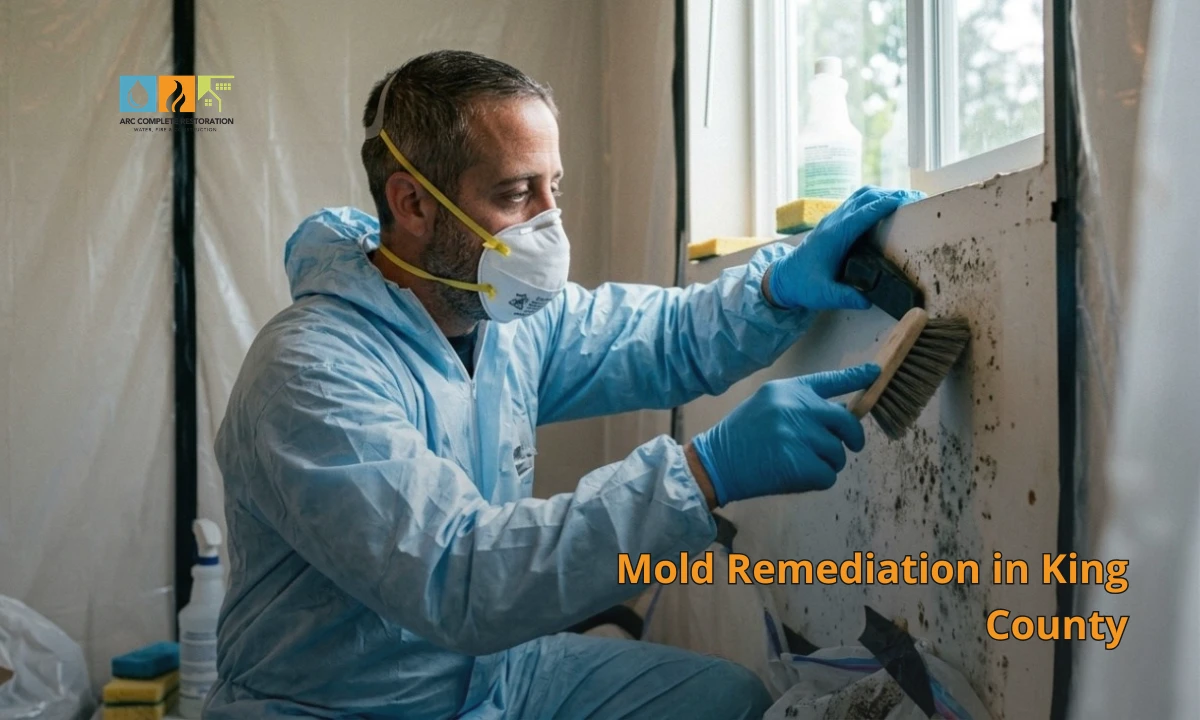
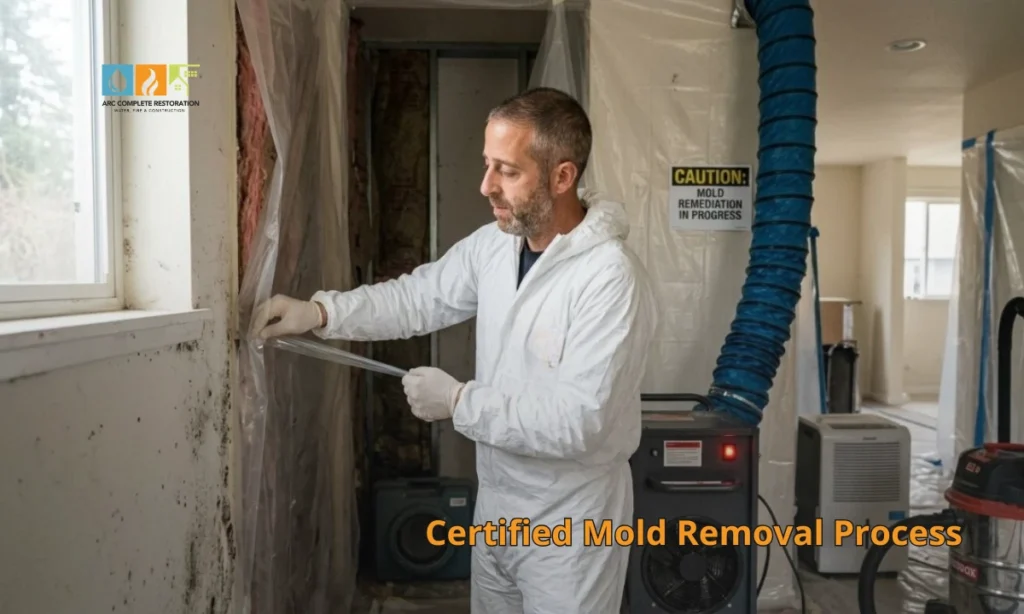
Before any removal begins, ARC establishes negative air pressure containment around affected areas. This prevents spore migration into clean parts of the building during remediation work. Critical zones are isolated with physical barriers and HEPA-filtered exhaust systems that run continuously throughout the project.
Commercial-grade HEPA air scrubbers run throughout the remediation and post-removal phases. These machines filter airborne spores down to 0.3 microns and bring indoor spore concentrations back to safe baseline levels. Air quality is continuously monitored so technicians know when filtration is complete.
Contaminated porous materials, including damaged drywall, insulation, carpet padding, and subflooring, are physically removed and disposed of following Washington State guidelines. A common misconception is that bleach alone solves the problem. Bleach kills surface mold, but it does not penetrate porous materials like wood framing or drywall. It also does nothing to address the moisture source, so mold returns.
After removal, ARC applies EPA-registered antimicrobial solutions to all affected structural surfaces. These treatments eliminate residual spores and inhibit future growth. They are specifically formulated for residential applications and safe for occupants once dry.
Removing mold without correcting the moisture source guarantees recurrence. ARC identifies and corrects water intrusion points, improves ventilation in attics and crawlspaces, and installs humidity controls and moisture barriers where needed. Properties in the Snoqualmie Valley, along the Green River corridor, and in low-lying areas of Renton and Kent are especially likely to need long-term moisture management solutions.
Soft goods including clothing, upholstery, books, and documents can absorb mold spores and odors. ARC works to salvage as much as possible using HEPA vacuuming, antimicrobial fabric treatment, and professional cleaning before recommending disposal. Non-porous items are cleaned and cleared for reuse. Porous items with deep contamination that cannot be safely restored are documented for insurance purposes.
This is where ARC separates from remediation-only companies. After contaminated materials are removed, ARC rebuilds. Drywall replacement, framing repairs, insulation reinstallation, subfloor work, and interior finish restoration all happen under one contract. If the mold was caused by a broken pipe, failing roof shingles, or a faulty HVAC system, those underlying issues also get corrected as part of the scope. You get a property restored to pre-loss condition, not just a cleaned-out shell. For properties where water was the root cause, our water damage restoration service integrates directly with mold remediation work
Removing mold and affected materials improves odor, but it rarely eliminates it entirely on its own. Furnishings, framing, and soft contents absorb musty odors that persist long after visible growth is gone. ARC uses thermal fogging, hydroxyl generators, and ozone treatment to neutralize odors at a molecular level, not just mask them. This step is particularly important in older Seattle neighborhoods like Georgetown, Beacon Hill, and Rainier Valley, where building materials in older homes absorb and retain odors more readily.
Most mold removal professionals charge $10 to $25 per square foot. Removing mold from a 100-square-foot area typically costs between $1,000 and $2,500. For whole-home or severe contamination, professional remediation in the Seattle area ranges from $3,500 to $12,000 for most properties. Importantly, mold remediation costs in Seattle run approximately 17% below the national average.
Key factors that affect your total cost include the size and location of contamination, whether mold has reached HVAC ductwork or a crawlspace (harder access increases labor time), the presence of black mold requiring enhanced protective equipment, and whether structural repairs are part of the scope. Most projects are completed in one to five days. ARC provides a free written estimate before any work begins, with no hidden fees.
For insurance coverage: policies generally cover mold remediation when the cause is a sudden, covered event like a burst pipe or storm damage. Mold from gradual leaks or deferred maintenance is typically excluded. ARC documents everything your adjuster needs and handles direct communication with your insurer.
We work regularly with State Farm, Safeco, Liberty Mutual, Allstate, Farmers, USAA, and Travelers. Seattle also requires permits for remediation projects exceeding 10 square feet, with residential permit costs of $186 plus inspection fees of $165 to $245. ARC manages that process on your behalf.
For rental property owners in King County, mold is not just a maintenance issue. It is a legal and financial liability. Under Washington’s Residential Landlord-Tenant Act, RCW 59.18.060, landlords must maintain rental units in habitable condition. That obligation includes correcting water intrusion, fixing ventilation defects, and addressing any conditions that jeopardize tenant health or safety.
Washington is also one of few states that requires landlords to provide Department of Health-approved mold disclosure information to tenants under RCW 59.18.060(13).
A property that remains mold-contaminated after written tenant notice can expose a landlord to habitability claims, rent withholding, or litigation. ARC responds quickly, produces detailed written documentation suitable for legal and compliance purposes, and provides post-remediation clearance verification that confirms the unit meets safe indoor air quality standards. That documentation protects you whether the situation involves a regulator, an attorney, or a future buyer.
ARC serves landlords and property management companies across Seattle, Renton, Kent, Federal Way, Burien, SeaTac, Shoreline, and every other market in King County. Multi-unit buildings and single-family rentals both receive the same direct, documented response.
Some signs are obvious. Black, green, or white spots on walls, ceilings, bathroom tile grout, or under sink cabinets all indicate active growth. Others are subtler.
A persistent musty odor in a basement, crawlspace, or bathroom with no visible source often signals hidden growth inside wall cavities or under flooring. EPA guidelines recommend professional intervention when visible mold covers more than 10 square feet.
Health symptoms matter too. Household members experiencing unexplained coughing, respiratory irritation, chronic headaches, or fatigue that improves when away from the building all suggest elevated indoor spore levels. Mold exposure can trigger allergic reactions, aggravate asthma, and at high concentrations, cause neurological symptoms.
Other triggers include warped drywall, bubbling paint, and water stains that indicate ongoing moisture behind surfaces. If mold returns shortly after DIY cleaning, the underlying moisture source has not been addressed and professional remediation is needed.
Recent flooding, a roof leak, or a plumbing failure are also immediate reasons to act. In those cases, water damage and mold remediation work together as a single coordinated response.
ARC holds IICRC certification, meeting the industry standards set by the Institute of Inspection, Cleaning and Restoration Certification, and is licensed and insured in Washington State (License #ARCCOCR753N6).
Every technician who enters your property is part of ARC’s own crew. There are no subcontractors, no franchise networks, and no handoffs between companies.
ARC is based at 13130 44th Ave S in Tukwila, WA 98168, a central King County location that allows fast dispatch to every community in the county.
From Enumclaw and North Bend in the Cascade foothills to Shoreline and Woodinville in the north, and from Vashon Island to the Sammamish Plateau, every property falls within our direct service area.
Post-remediation clearance testing confirms the job is complete before we close the project.
That clearance report protects you for insurance documentation, real estate disclosure, and legal records. If your property also sustained smoke and soot exposure, ARC handles fire damage restoration under the same coordinated process.
Call ARC Complete Restoration 24 hours a day at (425) 276-7147. We answer every call and dispatch from Tukwila without delay.

License number #ARCCOCR753N6
Fully Insured for Residential and Commercial Work
EPA Lead-Safe Certified Firm
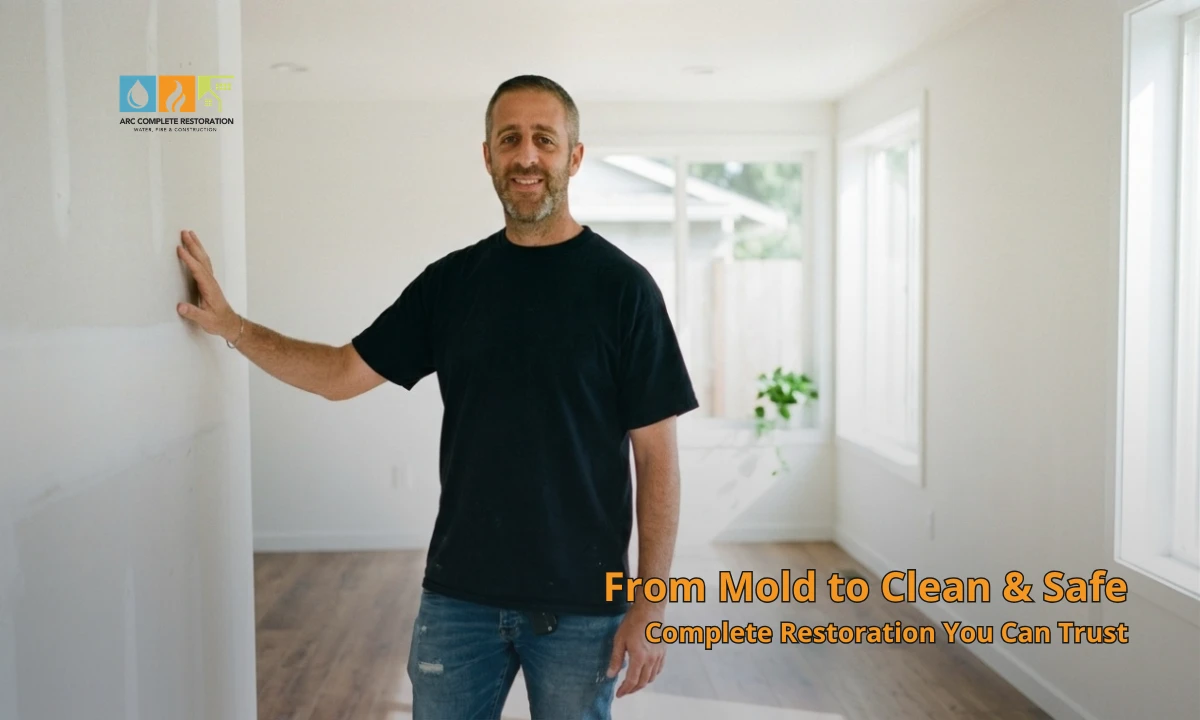
Our Tukwila location gives us a genuine response-time advantage across south King County. We serve Seattle neighborhoods including Georgetown, South Park, Rainier Beach, Beacon Hill, West Seattle, Skyway, White Center, Boulevard Park, and SoDo.
We cover Renton, Burien, SeaTac, Kent, Auburn, Des Moines, Normandy Park, and Federal Way to the south and east.
On the Eastside, we reach Bellevue, Redmond, Kirkland, Issaquah, Sammamish, Mercer Island, and Newcastle.
To the north, we serve Shoreline, Kenmore, Lake Forest Park, Bothell, Woodinville, Duvall, Carnation, and communities along the SR-99 and I-5 corridors.
We also serve the Snoqualmie Valley communities of Snoqualmie, North Bend, and Fall City, as well as Maple Valley, Covington, Black Diamond, Enumclaw, Ravensdale, Hobart, and Vashon Island.
Mold remediation in Tukwila and the surrounding 98168 zip code corridor is a core part of our daily work, and we know the housing stock, the insurance landscape, and the local building requirements in this area well.
Commercial properties throughout King County also fall within our service area, including office buildings in Bellevue and Redmond, warehouses along SR-167 in the Kent Valley, and retail properties near Southcenter and Renton Landing.
How long does mold remediation take?
Most projects are completed in one to five days. The timeline depends on contamination size, location (HVAC and crawlspace work takes longer), and whether structural repairs are part of the scope. ARC gives you a clear timeline estimate before work begins. Post-remediation air quality testing, if performed, may add one to two additional days for lab results.
Will my homeowner's insurance cover the cost?
Coverage depends on the cause. Mold resulting from a sudden covered event like a burst pipe is generally covered. Mold from gradual leaks or deferred maintenance is typically excluded. ARC handles documentation and communicates directly with your insurer to maximize your claim.
Can I stay home during remediation?
For contained areas like an isolated bathroom or attic, occupants can often remain in unaffected parts of the home. For severe or widespread black mold contamination, temporary relocation may be advisable. ARC’s technicians give you an honest recommendation based on your specific situation during the initial assessment.
Does mold come back after remediation?
It can, if the moisture source is not corrected. ARC’s process always includes identifying and fixing the underlying water intrusion or humidity problem. Antimicrobial treatment combined with proper moisture control is the only lasting solution.
What is the difference between mold remediation and mold removal?
Mold removal refers to the physical extraction of contaminated materials. Mold remediation is the complete process: assessment, containment, filtration, removal, antimicrobial treatment, moisture correction, and post-remediation verification. Because mold spores exist naturally in all environments, the goal of remediation is to return indoor spore levels to safe outdoor baseline levels, not to achieve zero spores. ARC follows IICRC S520 standards throughout.
As a King County landlord, am I legally required to address mold?
Yes. Under RCW 59.18.060, landlords must maintain habitable conditions and address health and safety issues including mold caused by landlord-controlled defects. Washington also requires providing Department of Health-approved mold information to tenants. ARC produces the documentation needed to demonstrate prompt, compliant action.
If mold has growth in your home or business anywhere in King County, call ARC Complete Restoration now at +1 425 276-7147. We answer every call, 24 hours a day, and we can go and give you a free inspection.
The longer water sits, the deeper it goes. What starts as a wet floor can become a mold problem or structural damage within 24 to 48 hours.
We are available 24 hours a day, 7 days a week, with an emergency response time of under 30 minutes.
Don’t Wait
Protect Your Home Today
Our next step will be to send you a clear and professional proposal crafted to align fully with your requirements